SGX Runtime
SGX Runtime is a new product in the SGX suite. It provides compression, storage and synchronised playback of SGX animation data inside the game engine. Built on the well-established FaceFX Runtime technology, it provides a new route to deployment of high-quality SGX animation.
Key features
-
SGX Compiler
-
Converts SGX keyframe animation into optimized binary
-
Massive storage savings for high-volume dialogue -- up to 99% reduction
-
Specialized procedural compression – no quality dilution
-
Thread-safe performance – built to scale across cores
-
Run from command line as part of your content pipeline, or embed directly into your own tools via C API
-
-
SGX Runtime
-
Deploys compiled animation to game via easy C API
-
From disk to cache with no translation layer
-
Playback from contiguous memory for high throughput and efficient prefetching
-
Automatically manages synchronized audio and animation output
-
Platform support for Windows, MacOS, Linux, PS4, PS5, Xbox One, Xbox Series X|S, Nintendo Switch 2, iOS, Android
-
-
Unreal Plugin
-
Seamless integration for cinematic quality animation inside Unreal Engine
-
C++ and Blueprint support
-
Sequencer integration for precise timing and control
-
Automatic audio sync with Unreal's sound system and Wwise
-
MetaHuman compatible
-
See the SGX Runtime User Guide for more information.
New character setup UI
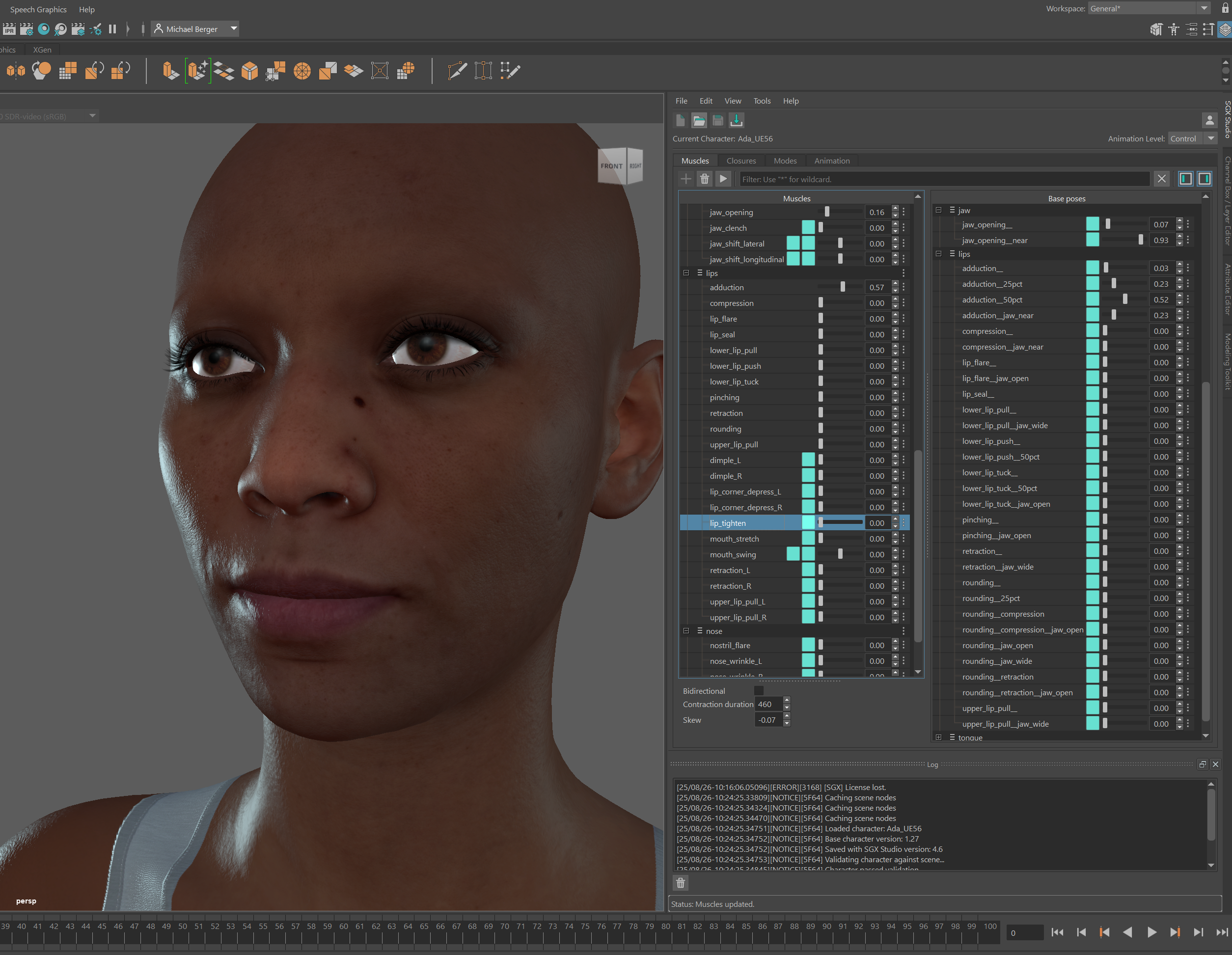
SGX Studio has been fully revamped, with a new, more user-friendly interface for character setup. This includes changes in both Maya and Unreal.
Highlights
-
New pose-setting experience. Removal of hard-to-interpret muscle status color-coding and complex tool bar. There is now a separate button in the UI for every pose that needs to be set, providing a clear picture of work needed.
-
Muscles panel in Maya now includes base poses for complete end-to-end control of muscle setup
-
Better use of space - smaller and fewer buttons, removal of unnecessary icons, increased reliance on context menus
-
Ability to create a muscle without a pose, and define the pose later
-
Ability to set a negative pose without the positive pose being set first
-
Warning provided when loading a control file that drives connected or driven attributes in Maya
-
Maya support to 2027, Unreal Engine support to 5.8
-
Various UX improvements and fixes (See Release Notes for more detail)
See the SGX Studio User Guide for more information.
Japanese 3.0
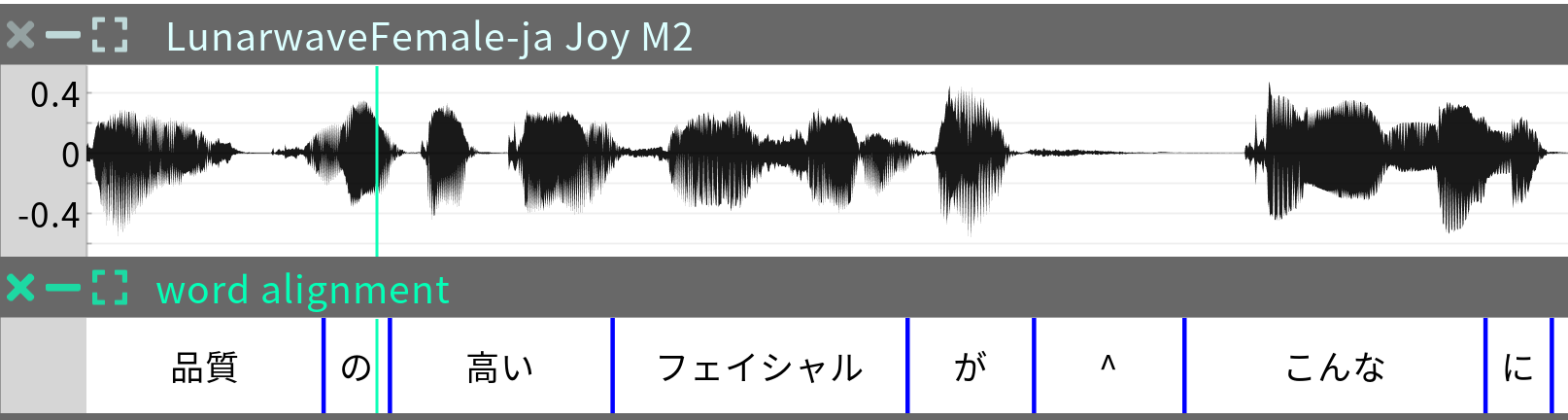
In support of our mission to provide the best multi-lingual animation, we continually update our language modules. Our most recent effort produced Japanese 3.0, a significant advance in Japanese animation.
Highlights
-
Improved pronunciation model for more phonetically accurate output
-
New text analysis model providing greatly improved word segmentation accuracy, leading to fewer errors
-
Support for full-width Latin letters
-
Compatible with older versions of SGX, but to maximize improvements, use with SGX Production Tools 4.6 or later
Out-of-the-box MetaHuman support
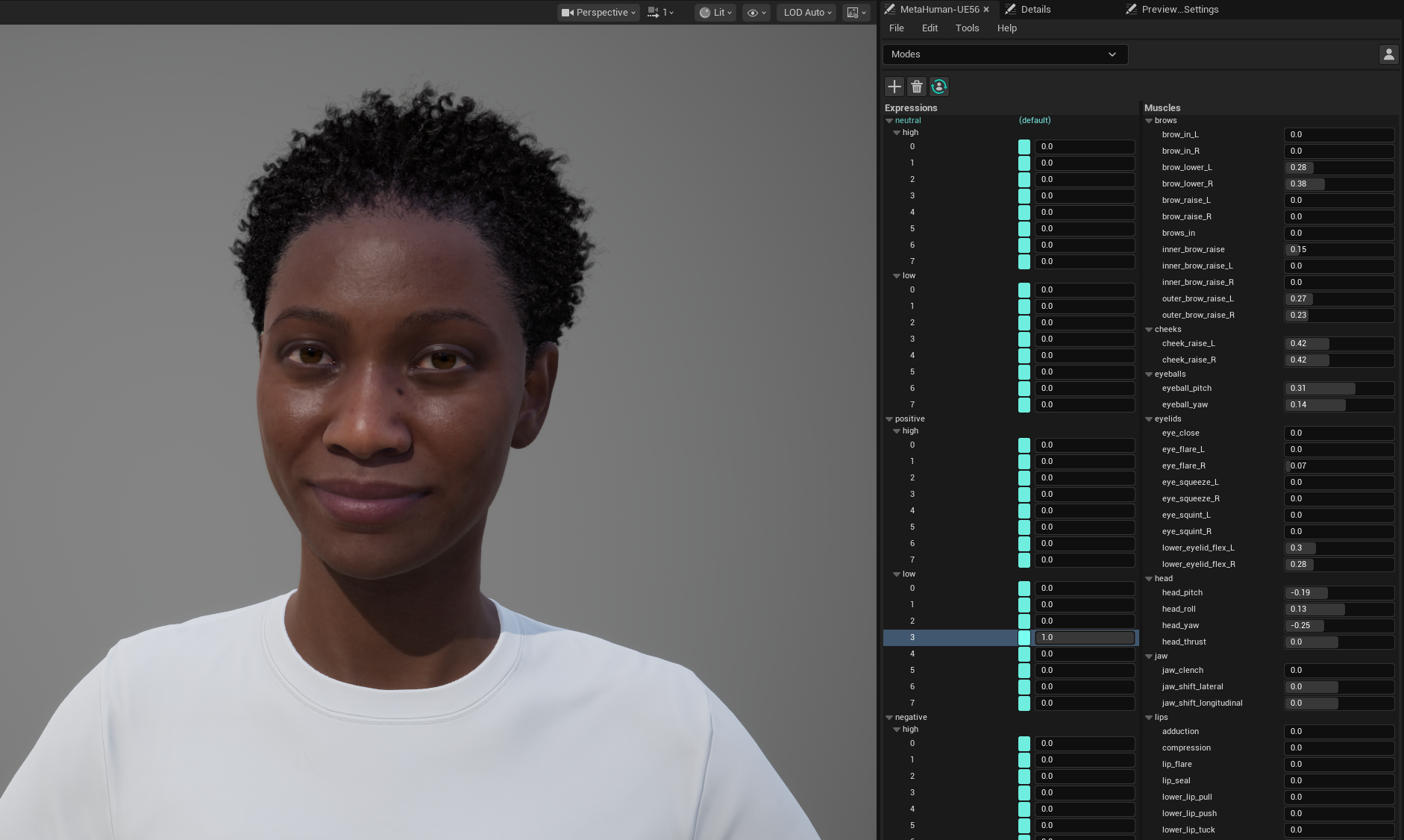
SGX Studio for Unreal Engine now fully supports the latest MetaHumans created in the in-engine plugin (UE 5.6+). SGX Studio treats the body as the leader pose, which mimics the setup that the MetaHuman blueprints use. The result is that both the face and body are fully controlled live in SGX Studio as with previous versions of MetaHumans.
In addition, there is now a Universal MetaHuman character control file (based on the Ada preset character), which can serve as the basis for all MetaHuman character setups. The muscle poses established in this file generalize well across MetaHumans by leveraging the generality of the underlying MetaHuman control rig. New characters should require little or no editing to get started, with focus on editing the behavior modes to personalize the character. The universal MetaHuman control file is available on the Speech Graphics download site (All Files > MetaHuman Character Control Files).
Lip seal
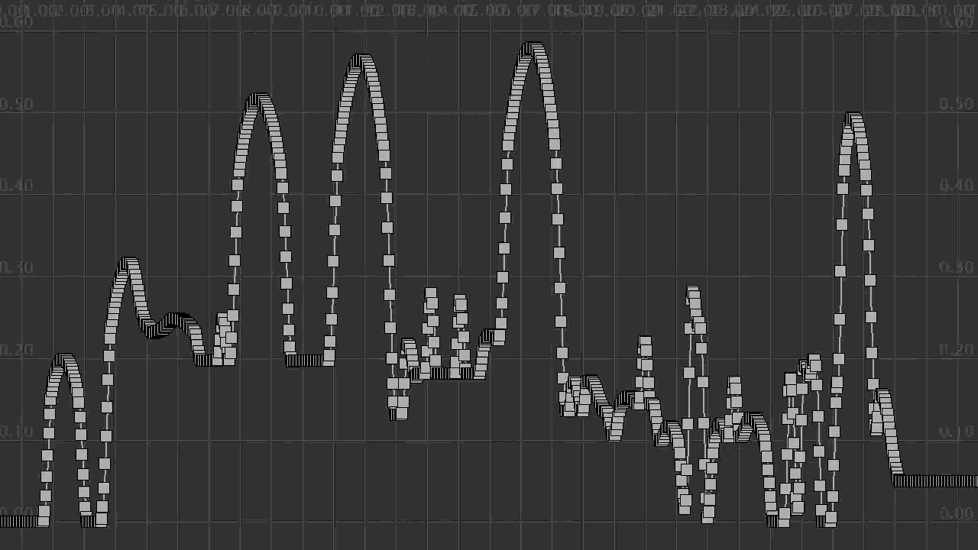
New characters created or updated with SGX Studio Maya 4.6 will have an additional base pose called lip_seal__, which is driven by a combination of muscles (jaw_opening and lip_seal). The effect of this pose is to draw the upper and lower lips together to seal the gap between them. The lip seal is automatically activated by SGX when appropriate – specifically, when the jaw is hanging slightly open due to gravity (as long as the character is not speaking or mouth breathing).
Technically, lip seal simulates the effect of the negative intraoral air pressure differential holding the lips together as the jaw opens slightly. This provides greater realism during speech pauses.
If you would like lip seal added to existing characters for you, contact the SGX customer service team.
Scoped logs
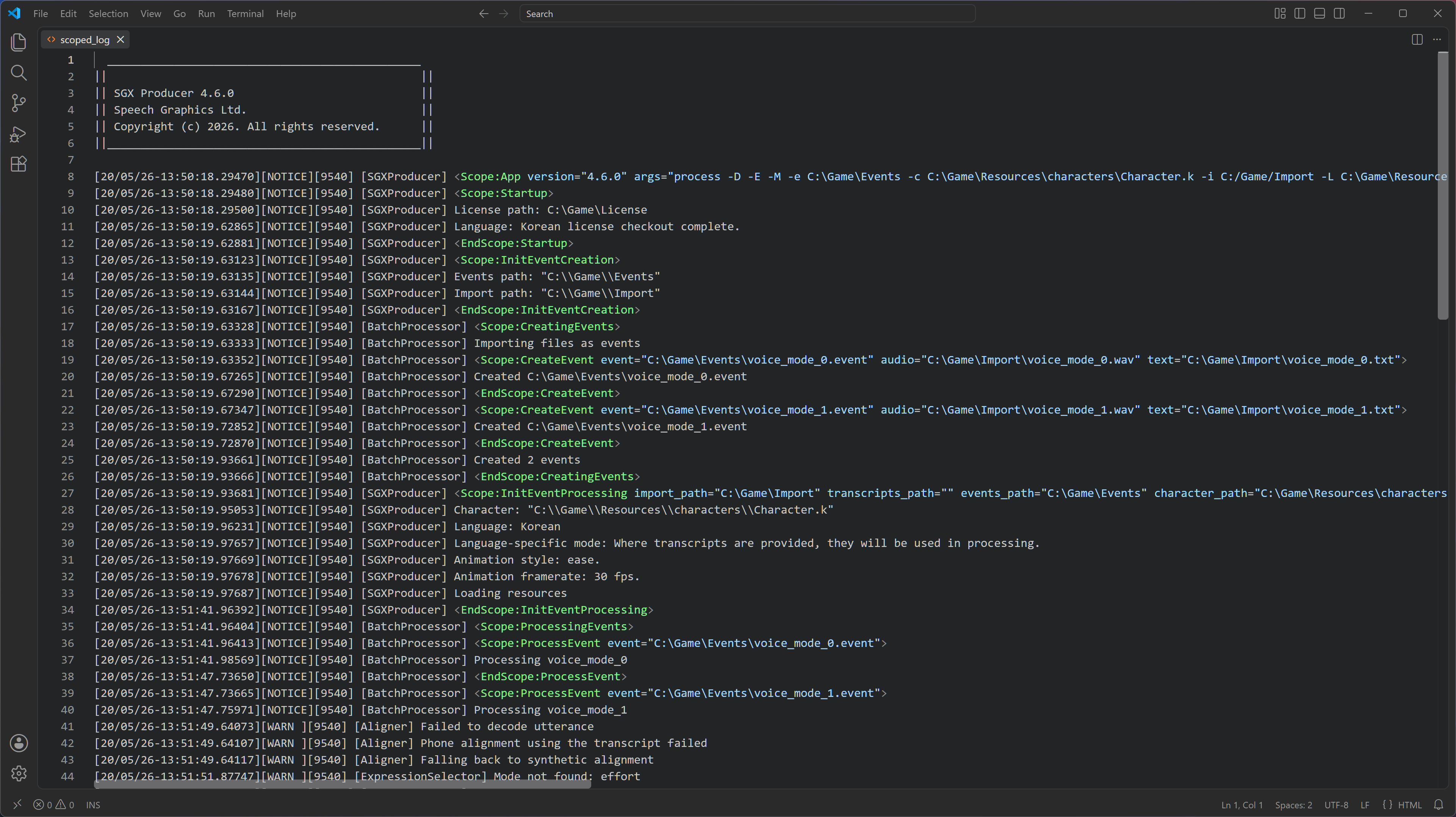
There is now an option in SGX Producer for scoped logging. If enabled, this injects opening and closing tags into the batch processing log output around processing stages and iterations. Scopes are nested, and all log messages are contained in scopes. This format enables automated log parsing scripts to isolate specific processing stages, trace errors to distinct source assets, and gather performance metrics. See Scoped Logging for more information.